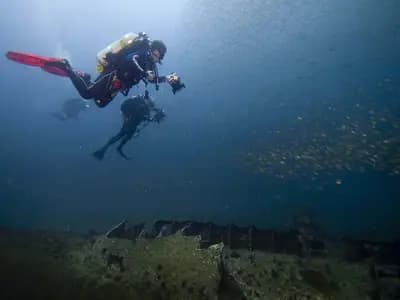
The Philippines' remote World Heritage reef rewards careful planning with walls, sharks, turtles and a conservation model built around a short liveaboard season.
The PROTECT package treats drowning as a systems failure involving childcare, transport, infrastructure, rescue and climate preparation, not a single bad choice.
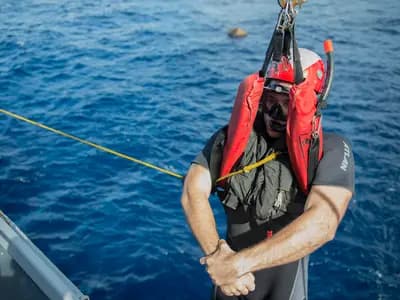
Diving emergencies far from shore involve costly medical evacuations and coordination. Here is how that response is actually funded and organised, and who calls the shots.
DAN's annual diving reports track how divers die each year, and the leading cause is rarely the dramatic equipment failure popular imagination assumes it to be.
The fourth global coral bleaching event hit 84 percent of the world's reefs. Here is what that means underwater, and what responsible diving looks like now.
Research divers work under formal scientific diving safety standards, but a marine science background does not make deep or technical diving inherently safer to attempt.
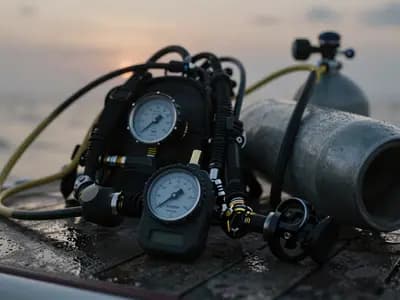
Below 50 metres, ordinary air becomes a liability for divers. Here is the physics behind nitrogen narcosis, rising gas density, and why trimix exists as the technical diving standard.
Cave diving safety rests on a small set of hard rules built from decades of accident analysis. Here is what those rules are and why the sport enforces them so strictly.
After six divers died in a Vaavu Atoll cave, the Maldives is drafting new rules to permit and regulate technical diving in the country for the first time in its history.
MNDF Sergeant Major Mohamed Mahudhee died searching a Maldives cave for five missing divers. His death shows the risk that recovery divers accept on behalf of strangers.