Nasdaq Falls 2.6% and Chip Stocks Plunge as Brent Oil Jumps to $113 and Treasury Yields Slide
Heavy AI spending doubts and talk of fresh strikes on Iran sent the Nasdaq to its worst day since June on Thursday, while the Dow held flat and bond yields dropped below 5 percent.
Friday, October 23, 2026/2 min read
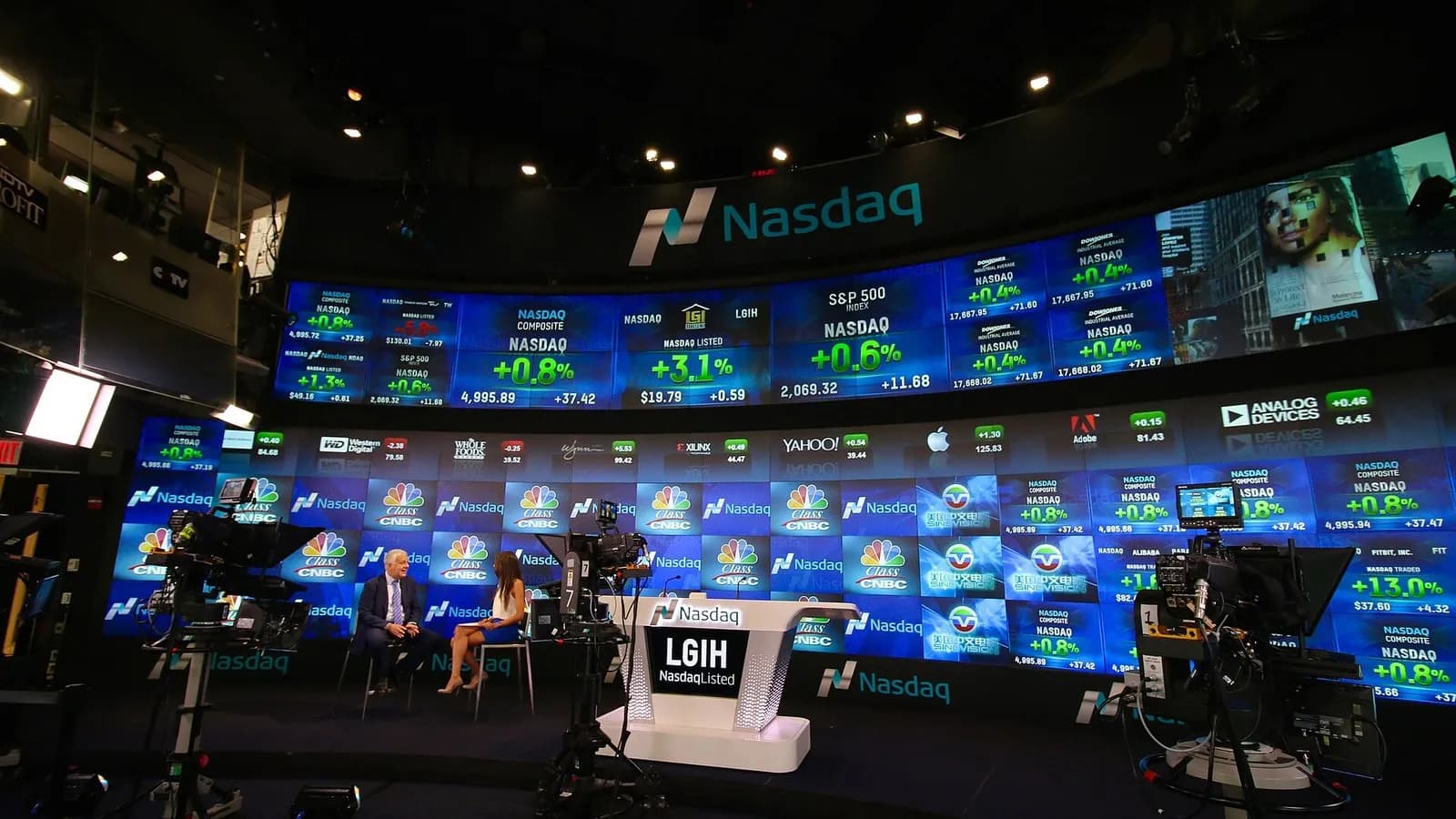
Wall Street split in two on Thursday. The Nasdaq Composite fell 2.6 percent to 26,008.86, its worst session since June, and the S&P 500 lost 1.21 percent to 7,663.43, while the Dow Jones Industrial Average edged up 11.89 points to 52,867.98, according to closing figures compiled by HDFC Sky.
The cause was a collision of two worries. Investors questioned how much the technology industry is spending on artificial intelligence, and oil jumped on reports that the United States and Israel are planning new strikes on Iran. That is a sharp reversal from Wednesday's rally, when AI earnings had lifted the Nasdaq more than 1 percent.
Why did chip stocks fall so hard?
The Philadelphia Semiconductor Index dropped 6.72 percent to 10,731.98. Lam Research fell 11.76 percent, CoreWeave 10.06 percent, Applied Materials 8.18 percent, Advanced Micro Devices 8.13 percent and Intel 8.03 percent. Nvidia lost 4.40 percent.
Meta Platforms, down 6.97 percent, was a focal point after it reported record revenue but also free cash flow below zero and a plan for a new class of non-voting shares, which we examine in our Meta earnings report. NBC News quoted Deutsche Bank's Henry Allen describing "another difficult 24 hours for markets," and said Nvidia chief executive Jensen Huang had called capital for the AI boom increasingly scarce. Tesla slipped 3.08 percent after cutting its annual capital spending forecast.
What happened to oil and bond yields?
Brent crude rose 4 percent to $113.17 a barrel and West Texas Intermediate gained 2.39 percent to $99.47, both the highest since early May. NBC News linked the move to a New York Times report that Washington and Jerusalem are preparing renewed strikes on Iran after the 3 November midterm elections, which we describe in our report on the plans.
Investors bought government bonds. The 10-year Treasury yield fell more than 18 basis points to 4.965 percent, below 5 percent for the first time since late September, and the 2-year yield dropped to 4.65 percent. The VIX volatility gauge rose about 9 percent to 18.25.
Which stocks bucked the trend?
Defensive and industrial names held up. Procter & Gamble rose 5.59 percent after beating earnings and raising its revenue guidance, Netflix added 3.14 percent, and the Dow Jones Transportation Average climbed 1.87 percent. Small caps were steadier than the big index: the Russell 2000 slipped 0.11 percent.
What comes next for the market?
Friday opens with oil near its highest level in nearly six months and the S&P 500 only modestly below the record it set earlier this month, NBC News noted. Traders will watch whether Thursday's chip rout spreads or fades, and whether crude holds above $110 as the Iran story develops. With the midterms on 3 November and the yield on the 10-year note suddenly lower, the next moves in oil and AI shares are likely to decide the tone for the rest of the month.
Published in The Outspoken Digest
Editorial desk
Outspoken Digest Markets DeskReports for The Outspoken Digest across Business, Crypto.
Newsletter
The Digest, in your inbox
One edition, sent when it is ready. No noise, and your address is never passed on.
Read Next
More Business →
Wall Street Week Ahead: A Fed Decision on Wednesday, Alphabet, Microsoft and Amazon Report, and Oil Near $117
Oct 26, 2026/2 min read
Dow Sheds More Than 600 Points as Brent Passes $116 and Houthi Attacks Rattle Wall Street
Oct 24, 2026/2 min read

Meta Reports $64.6 Billion Revenue and Negative Free Cash Flow, and Plans a New Class of Non-Voting Shares
Oct 23, 2026/2 min read

Tesla Beats Profit Estimates on $28.05 Billion in Revenue, Then Slips After Hours
Oct 22, 2026/2 min read