Blacktip Sharks Can Hear a Sound From Nearly 250 Feet Away and Swim Straight Toward or Away From It
A Florida Atlantic University study of free-swimming blacktip sharks off Palm Beach County found the animals could detect low-frequency underwater sounds from 74 metres away and change course in response, the clearest field evidence yet of shark hearing range.
Thursday, October 1, 2026/2 min read
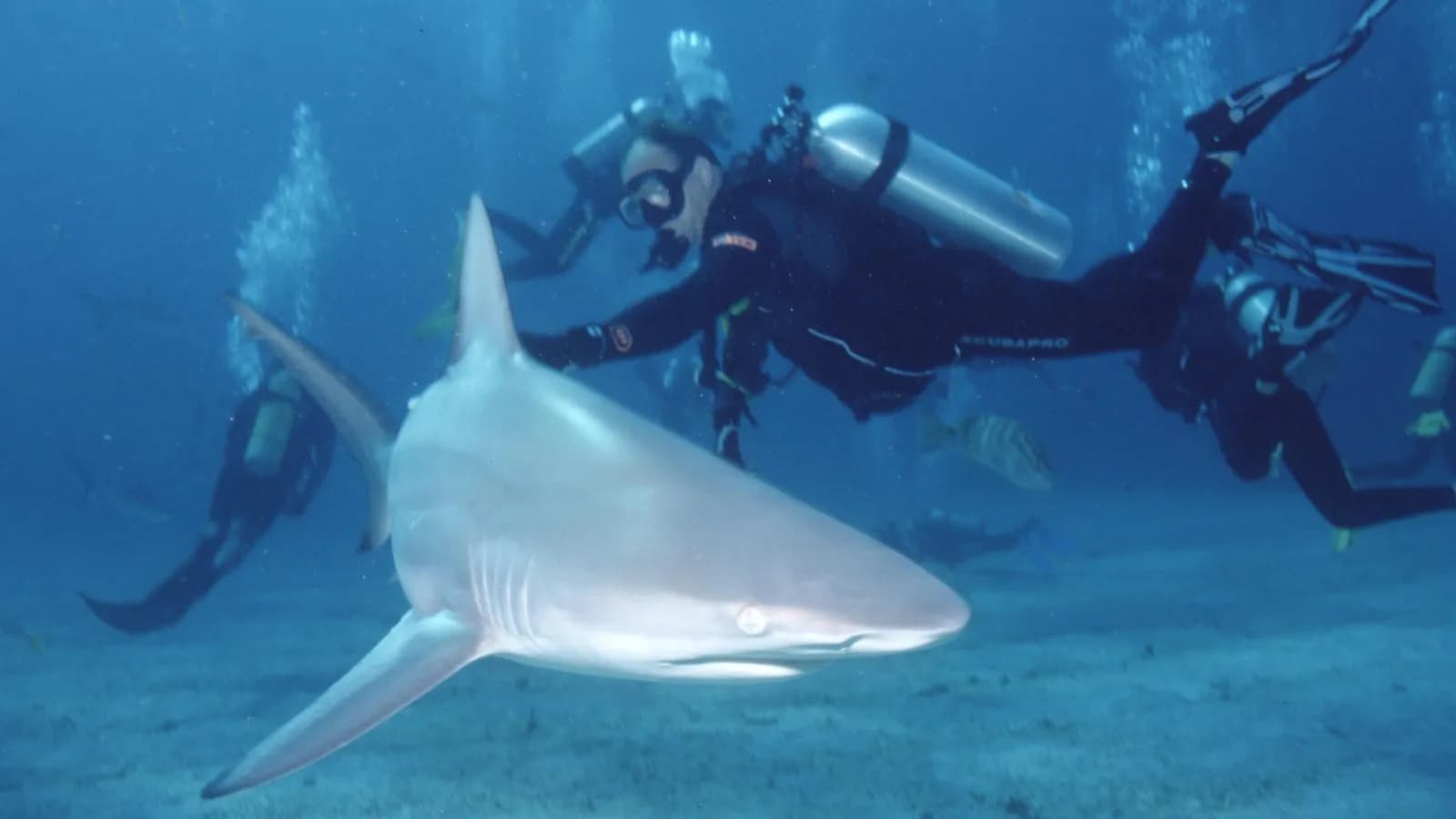
Researchers at Florida Atlantic University have produced the first quantified evidence that free-swimming blacktip sharks can detect low-frequency underwater sounds from up to 74 metres away, roughly 243 feet, and determine which direction the sound is coming from. The study, published in the journal Integrative Organismal Biology and detailed by Florida Atlantic University, was carried out in shallow nearshore waters throughout Palm Beach County.
How the test worked
The research team anchored a boat and deployed an underwater speaker that drifted with the current up to 19 metres from the vessel, a setup designed to minimise the boat's own presence from influencing the sharks' behaviour. Researchers then played three ranges of low-frequency sound, 100 to 200 hertz, 200 to 400 hertz and 400 to 800 hertz, alongside a 10 kilohertz control tone that sits outside the known hearing range of sharks, and tracked how nearby blacktip sharks responded to each.
A clear behavioural signal
When the low-frequency sounds played, sharks in the area rapidly changed course, a response the researchers interpreted as clear evidence the animals could both detect the sound and work out roughly where it was coming from, since a random or confused reaction would not produce the kind of directional course change observed. The control tone, outside the sharks' known hearing range, produced no comparable reaction, strengthening the case that the course changes were a genuine response to sound rather than an unrelated behaviour.
Why the distance matters
Previous studies demonstrating shark hearing had largely relied on captive or restrained animals in controlled tank settings, which made it difficult to say how far a genuinely free-swimming shark in open water could detect a sound under natural conditions. By testing wild, unrestrained blacktip sharks in their own coastal habitat, the Florida Atlantic team produced a distance figure that researchers in the field consider far more representative of how sharks actually use hearing to find prey, avoid danger or navigate their surroundings.
What low-frequency sound tells a shark
Low-frequency sounds in the ocean are often associated with struggling or injured fish, which is part of why researchers chose that frequency range to test, since it mimics cues sharks would plausibly use to locate a meal from a distance before other senses such as smell or vision come into play at closer range. Understanding how far that acoustic detection extends helps explain how sharks can locate prey across stretches of water too large or murky for vision alone to be useful.
Relevant beyond the lab
The findings have practical implications beyond pure biology, including for how human-made ocean noise, from boat engines to offshore construction, might interfere with a shark's ability to detect and locate the natural sounds it relies on to hunt. A report on the study said that with low-frequency ocean noise from shipping and construction continuing to rise in heavily trafficked coastal waters such as those off Florida, a clearer picture of exactly what sharks can hear, and from how far, gives researchers and regulators a more concrete benchmark for judging when human noise might start masking the cues sharks depend on.
Published in The Outspoken Digest
Editorial desk
Outspoken Digest Diving DeskCovers freediving, recreational and technical diving, dive medicine and the incidents the sport learns from.
Newsletter
The Digest, in your inbox
One edition, sent when it is ready. No noise, and your address is never passed on.
Read Next
More Diving →
A Sea Turtle Species Never Recorded Nesting in the United States Laid Eggs on a Southern California Beach
Oct 1, 2026/2 min read
Marine Surveyors Confirmed Living Coral Off Benin, More Than Sixty Years After the Reef Was Presumed Dead
Sep 29, 2026/2 min read

Divers Pulled 1,400 Metres of Abandoned Fishing Net Off an Oman Beach After Six Sea Turtles Were Found Dead in It
Sep 27, 2026/3 min read
Scuba Divers Find Two New Sea Spider Species in the Salish Sea, the First Described There in Almost a Century
Sep 26, 2026/2 min read