Altitude: What Happens to the Body Above 2,500 Metres and How to Climb Without Getting Ill
Fitness does not protect you and youth does not either. The only reliable defences are a slow ascent, sleeping lower than you climbed, and turning round at the first sign that the headache is not going away.
Tuesday, December 9, 2025/3 min read
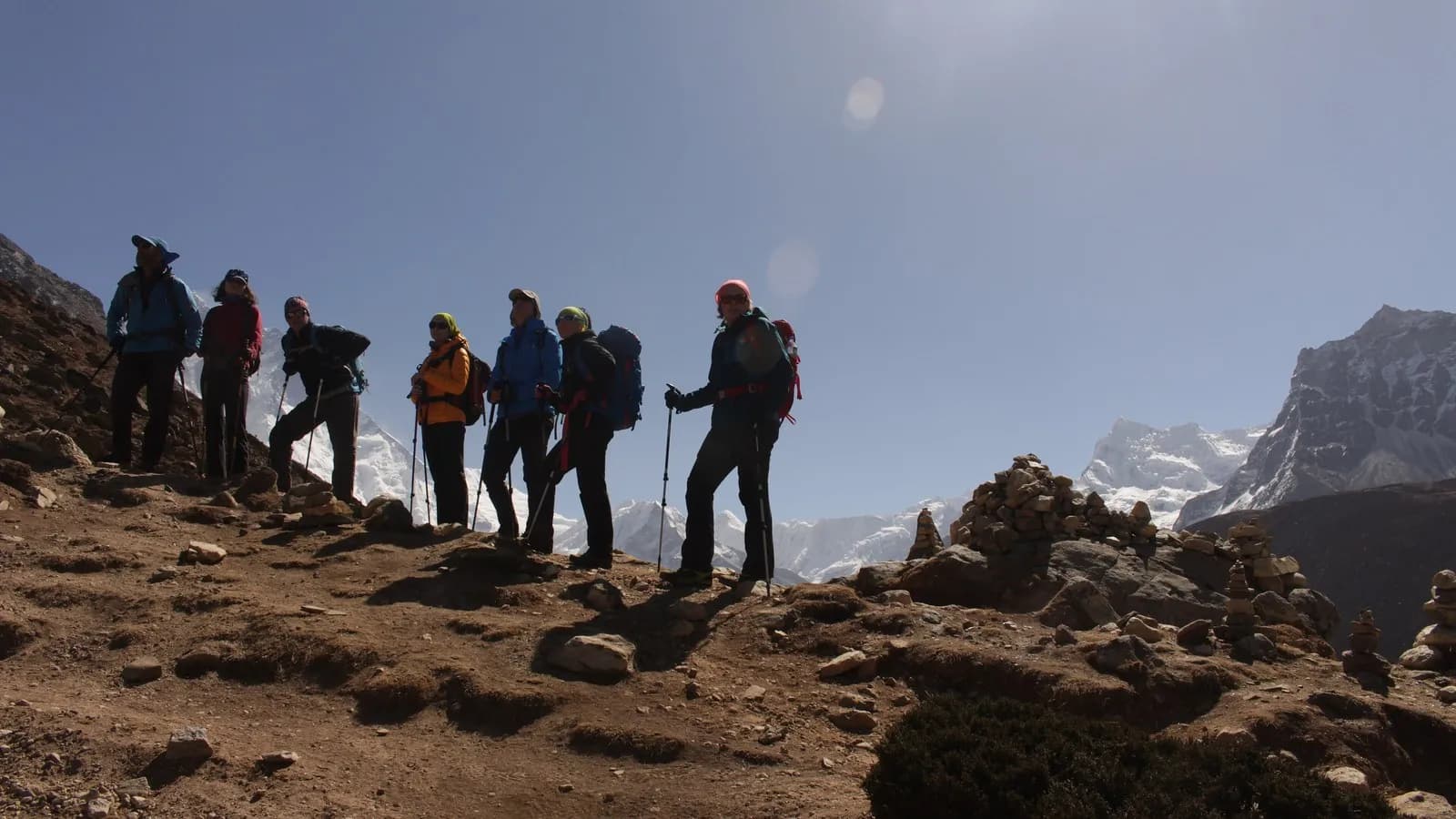
At sea level the air is about 21 per cent oxygen and it stays 21 per cent at the top of Everest; what falls is the pressure, and with it the amount of oxygen each breath delivers. At 2,500 metres, the height of many alpine villages, Cusco and the Ethiopian highlands, there is about a quarter less oxygen available than at the coast. At 3,500, Lhasa, La Paz and the Everest trekking route's first week, a third less. At 5,500, base camp, half. The body can adapt to all of these given time, and does so through changes that begin within hours and take weeks to complete. Illness at altitude is almost always the result of arriving faster than the adaptation can run. The NHS guidance is brief because the rules are.
The three illnesses
Acute mountain sickness is the common one: headache, plus some of nausea, poor appetite, dizziness, poor sleep and fatigue, beginning six to twelve hours after arriving at a new height. It affects perhaps a quarter of people who go quickly to 2,500 and more than half of those who fly straight to 3,500 or above. It is unpleasant and, if respected, harmless; it resolves in a day or two at the same altitude or within hours of descent. High-altitude cerebral oedema is what it can become if ignored and ascent continues: the brain swells, the sufferer becomes confused and unsteady, walking heel to toe becomes impossible, and without descent they die. High-altitude pulmonary oedema is fluid in the lungs: breathlessness at rest, a cough that becomes wet, a crackling chest, lips going blue. It can occur without any prior mountain sickness and is the bigger killer of the two. Both are emergencies whose treatment is descent, now, by any means, with oxygen and drugs as bridges to it.
The rules that work
Above 3,000 metres, sleep no more than 300 to 500 metres higher than the night before, and take a rest day every three or four days or every thousand metres gained. Climb high and sleep low; a day walk up and back down is acclimatisation, a night higher is exposure. Drink enough that urine is pale, since the dry air and the faster breathing lose water, but do not confuse hydration with a cure. Eat carbohydrate; appetite falls and energy matters. Avoid alcohol and sleeping pills for the first nights, both of which suppress the breathing that adaptation depends on. Arrive by road rather than air where the choice exists, or spend the first two nights at the arrival altitude doing nothing. And accept that the day's plan is provisional.
Drugs
Acetazolamide, a diuretic that makes the blood slightly acidic and drives faster breathing, roughly halves the risk of mountain sickness when started a day before ascent and continued for two days at the top height. It is the standard preventive for anyone who must go high fast, it is prescription-only in most countries, it makes fizzy drinks taste flat and fingers tingle, and it is not a licence to ignore the rules. Dexamethasone treats the brain illness and nifedipine the lung one, and both belong in an expedition kit with someone who knows when to use them. Coca tea, garlic, ginkgo and the rest do nothing measurable.
Who
There is no way to predict from fitness, age or sex who will be affected; marathon runners get it and sedentary grandmothers do not. The best predictor is what happened last time. People with heart or lung disease, and pregnant women, should take medical advice before going above 2,500; children can go, more slowly. And the single most important sentence in any altitude briefing is the one about honesty: a headache that has not gone after a night's rest and painkillers is a reason not to go higher, and a companion who is confused, unsteady or breathless at rest is a reason to go down in the dark. The mountains that trekkers go to see, as our Himalaya coverage keeps noting, are changing; the physiology of the people walking up them has not.
Published in The Outspoken Digest
Editorial desk
Outspoken Digest Health DeskMedicine, public health and the research behind the headlines, read carefully.
Newsletter
The Digest, in your inbox
One edition, sent when it is ready. No noise, and your address is never passed on.
Read Next
More Travel →
Dubai Had 869,000 Visitors in August, Its Best Month Since the War Began, and Hotels Are Back to Two Thirds Full
Sep 15, 2026/3 min read

Your Airline Owes You About Two Thousand Dollars for a Lost Bag, and Twenty One Days to Say So
Sep 2, 2026/4 min read

A Catamaran Ferry Left Kyrenia at Half Past Twelve and Began Taking On Water Almost Immediately
Aug 31, 2026/4 min read

Eight Point Seven Million Airport Customers Lost Data, and the Field That Matters Is the Number Plate
Aug 30, 2026/4 min read