Zipline Raises $1.5 Billion at a $21.5 Billion Valuation as Walmart Commits to 300 More Drone Delivery Sites
The drone company that began by flying blood to clinics in Rwanda has closed a round led by Paradigm, with Walmart signing up for a large expansion of its delivery network across the US.
Outspoken Digest Technology Desk
Friday, November 6, 2026/2 min read
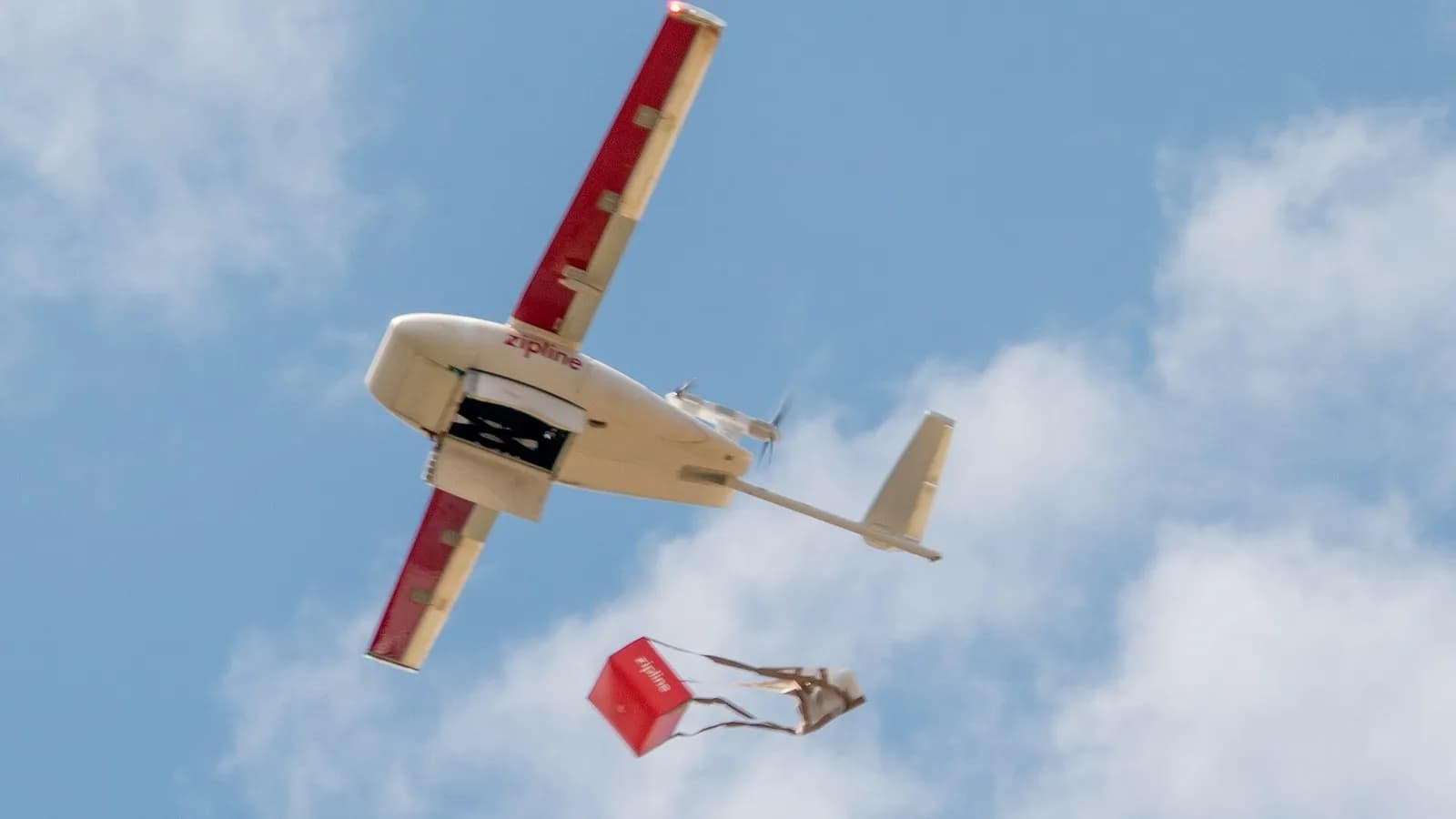
Zipline, the drone company that started out carrying blood to remote clinics in Rwanda, has raised $1.5 billion at a post-money valuation of $21.5 billion, and says Walmart will add 300 more drone delivery sites under a new multi-year agreement. The figures come from Zipline's own announcement on Thursday, and are confirmed by TechCrunch's report.
The round was led by Paradigm, WCM Investment Management and Layer Global. Valor Equity Partners, Fidelity, Uber, Tiger Global, J.P. Morgan, ARK Invest and Salesforce Ventures also took part. The money will go on expanding Zipline's US manufacturing and hiring, with the aim of building a nationwide drone delivery network.
How big is the Zipline and Walmart drone delivery deal?
The two companies have worked together since 2021 and currently run 21 active drone delivery sites, TechCrunch says. The new agreement adds 300 more, and Zipline describes it as national and open to further expansion. That is a very large step from a small base, and it is worth noting that the sites are a commitment to build rather than a count of sites already operating.
Zipline says its work for Walmart, which began in 2021, is what the new money is meant to scale. Because the company builds its own aircraft, the manufacturing line is as important as the sites: every new location needs drones, docks and trained staff, which is why the funds are going to US factories and hiring rather than only to software. Neither Zipline nor TechCrunch said how many of the 300 sites are already planned or where they will be.
The investor list is also a signal. Uber, which partnered with Zipline earlier this year, sits alongside financial heavyweights such as Fidelity and J.P. Morgan, suggesting that delivery by air is now being priced as infrastructure rather than as a novelty.
What do Zipline's drones actually deliver?
Zipline now delivers food, retail, agricultural and health products in five African countries, several US cities and Japan, according to TechCrunch. Its Platform 2 home delivery drones carry up to 8 pounds within a 10-mile radius, while the larger Platform 1 aircraft handle long-range deliveries for businesses and governments, covering 120 miles round trip.
The company said its share of delivery revenue from the newer consumer service rose from 10.8% to 34.9% between March and October this year. It was founded in 2014, began US operations in 2020 with Novant Health in North Carolina and won FAA Part 135 air carrier certification in 2022, which allowed long-range commercial deliveries. It added a partnership with Uber earlier in 2026.
What happens next for drone delivery?
The test now is execution. A valuation of $21.5 billion prices in a lot of future growth, and 300 sites will need planning permission, aircraft, neighbours who tolerate the noise and regulators who keep approving longer routes. Neither Zipline nor TechCrunch gave a timetable for the new sites, so the pace at which they open is the figure to watch in 2027.
Published in The Outspoken Digest
Editorial desk
Outspoken Digest Technology DeskSoftware, hardware, artificial intelligence and what they change for everyone else.
Newsletter
The Digest, in your inbox
One edition, sent when it is ready. No noise, and your address is never passed on.
Read Next
More Technology →
Astronauts Install the Space Station's Eighth and Final Roll-Out Solar Array in a 7-Hour Spacewalk
Nov 6, 2026/2 min read

After the Ballot Rebuke, OpenAI Promises to Pay Full Power Costs and Drop NDAs, and Meta Admits Building Will Get Harder
Nov 6, 2026/2 min read
A Digital Twin of the Webb Telescope Pulls a Hidden Planet Out of Old Data and Makes JWST Up to 15 Times Sharper
Nov 5, 2026/3 min read

Voters Said No to Data Centres in 40 of 41 Local Ballot Measures, From Ohio Towns to Alhambra
Nov 5, 2026/3 min read