Terrazzo: How a Floor Made of Venetian Leftovers Became the Most Copied Surface of the Decade
Marble chips set in cement or resin and ground flat, invented by workers using the offcuts from their employers' floors. The real thing is poured in place and lasts centuries. Most of what carries the name today is a print.
Wednesday, December 20, 2023/3 min read
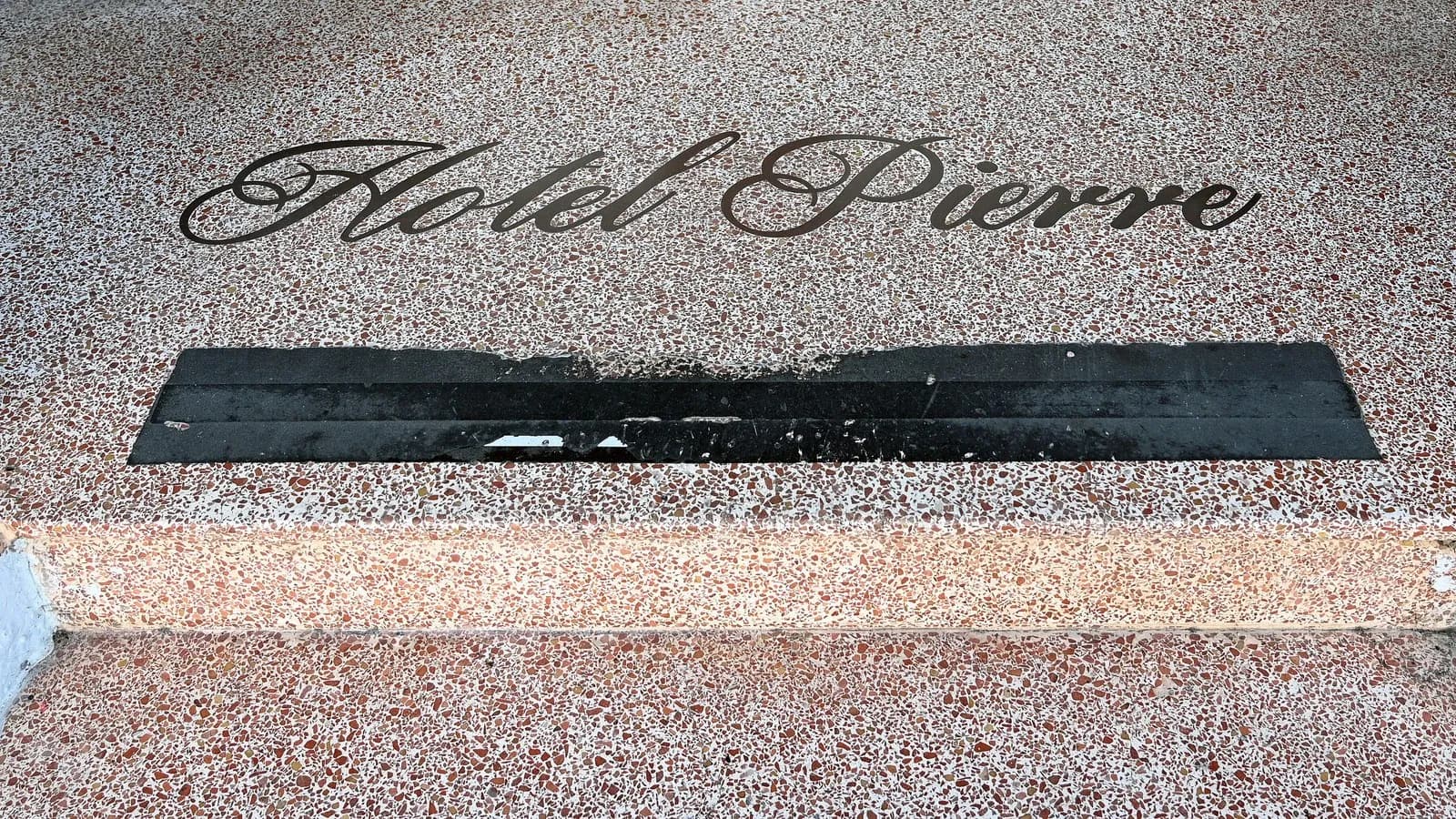
Terrazzo is the floor of every airport built between 1950 and 1975, of Italian palazzi from the fifteenth century, of Los Angeles's Walk of Fame and of about half the café tables photographed since 2018. It is marble, granite or glass chips set in a binder, cured, then ground flat and polished until the cut faces of the stones show as a random mosaic. The word is Venetian dialect for terrace. The technique is older than the name; Roman and Egyptian floors of crushed stone in lime survive, but the form we recognise was worked out in the Veneto, where marble workers took the offcuts from the grand floors they were laying for their employers and set them in clay for their own terraces, then sealed them with goat's milk to bring up the colour.
How the real thing is made
Traditional terrazzo is poured in place. A cement base is laid, brass or zinc divider strips are set into it to control cracking and mark the pattern, and a topping of chips and cement, two or three centimetres thick, is spread, rolled and left to cure for days. Then it is ground, first coarse and then fine, with water, which is slow, wet, noisy and the reason the trade nearly died in the 1970s when carpet and vinyl became cheap. Polished and sealed, it is almost indestructible; the floors in the 1930s public buildings of Britain and the United States have taken a century of feet and look as they did. Epoxy terrazzo, developed from the 1970s, uses a resin binder instead of cement; it is thinner, cures faster, takes brighter pigments and allows glass and mirror chips, and it is what most new commercial floors are. It is slightly less durable and cannot go outside, where ultraviolet yellows the resin.
Tiles, slabs, and prints
Precast terrazzo tiles, made in a factory and laid like any tile, are the honest middle: real chips, real grinding, joints every 40 or 60 centimetres. Large resin-bound slabs for worktops are the same idea. Then there is the rest: porcelain tiles printed with a photograph of terrazzo, vinyl planks printed with the same, laminate worktops, wallpaper, cushions. Printed terrazzo has no depth, repeats its pattern every few tiles, and shows a uniform surface where the real thing shows each chip cut at a slightly different plane. It is not a fraud when sold as porcelain; it becomes one when the listing says terrazzo and means a picture of it.
Why it came back
The Memphis group in 1980s Milan used it as a graphic, with big chips in primary colours, and that image resurfaced when the design world tired of grey. Its practical virtues then did the rest: it is one of the few floors that gets better with wear, it contains waste stone by definition, and a cement terrazzo is as recyclable as concrete. The Design Museum's collection and the V&A's architecture holdings both trace the modernist floors that made it civic; the domestic revival is younger and mostly on Instagram.
Buying and living with it
Poured in place is a builder's job and expensive per square metre, but priced over a lifetime it is among the cheapest floors there are. Tiles are a fair compromise for a kitchen or a bathroom. Cement terrazzo stains from acids, wine and lemon juice among them, and needs a penetrating sealer renewed every few years; epoxy does not. It is cold underfoot, which is a fault in Helsinki and a virtue in Dubai, and it is hard, which is why terrazzo kitchens have rugs. Chips of two or three sizes and a binder tinted a shade darker than the lightest chip is the classic look; a white binder with rainbow glass is the Memphis one. Both will outlast the trend that brought them back, which is more than can be said for the cushions.
Published in The Outspoken Digest
Editorial desk
Outspoken Digest Style DeskReports for The Outspoken Digest across Fashion, Design, Lifestyle.
Newsletter
The Digest, in your inbox
One edition, sent when it is ready. No noise, and your address is never passed on.
Read Next
More Design →
The Bench With the Extra Armrest Is Not Being Thoughtful About Your Posture
Sep 2, 2026/4 min read

The 400 Metre Cube Is Paused, Its Deadline Has Moved to 2040, and Its Chief Executive Has Gone
Aug 29, 2026/3 min read

A Beijing Studio Put a Restaurant Inside a Live Highway Underpass and Left Half of It to the Public
Aug 29, 2026/4 min read