Equalising on the Way Down: Valsalva, Frenzel, and Why the First Five Metres Decide the Dive
Most ear injuries in scuba happen shallow, on descent, to divers who waited for pain before they equalised. The technique matters less than the timing, and the timing starts on the surface.
Tuesday, June 6, 2023/3 min read
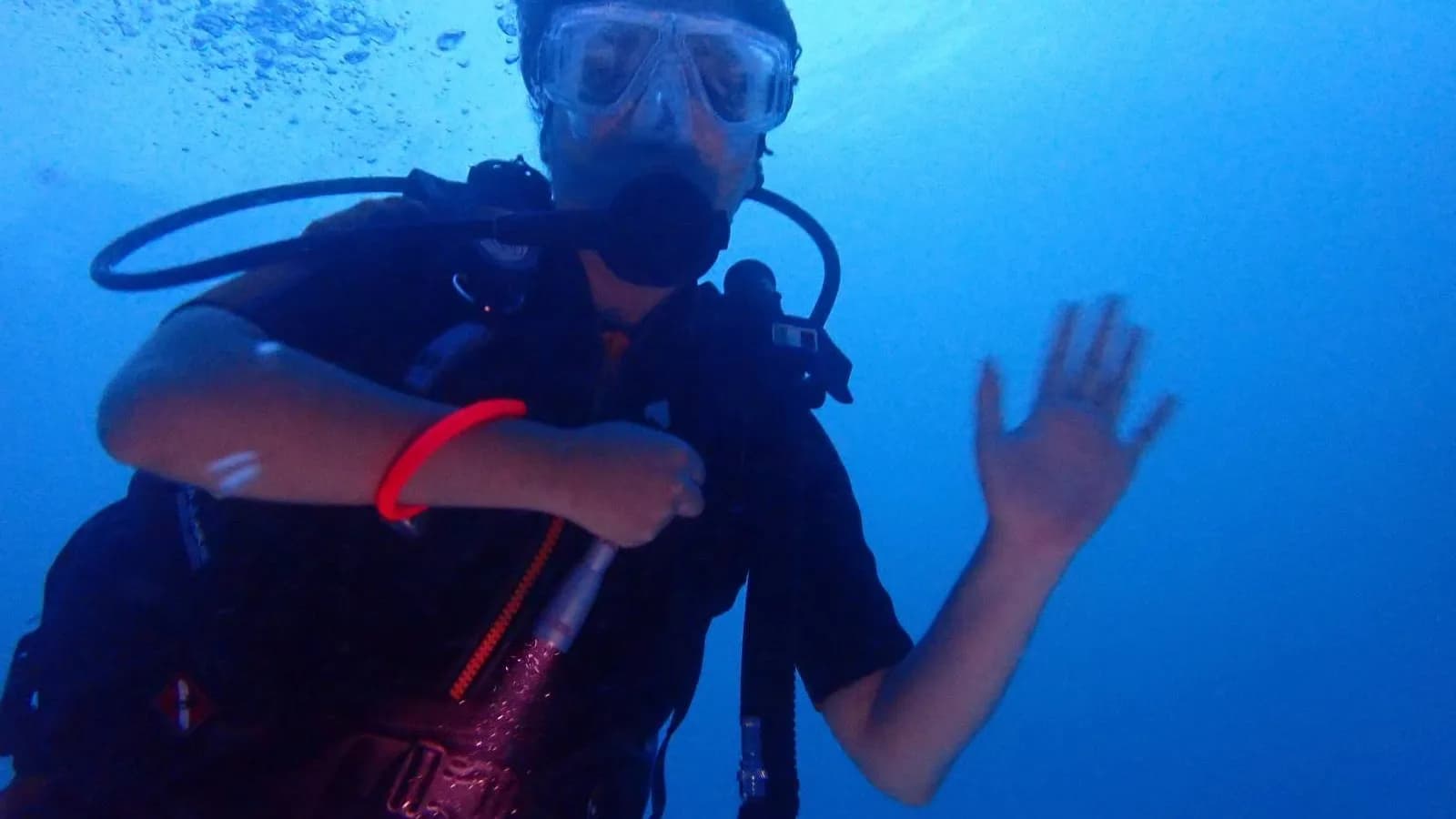
Pressure doubles in the first ten metres of seawater. Nowhere else on a recreational dive does the ratio change so fast, and nowhere else does the middle ear, a sealed air space behind the eardrum, have so little time to catch up. That is why ear barotrauma, the commonest injury in scuba, is a shallow-water injury. Divers Alert Network's medical resources put it near the top of every year's incident summary, and the British Sub-Aqua Club's safety pages say the same thing in different words: most of it is avoidable, and the avoidance is a habit rather than a trick.
What is actually happening
The Eustachian tube connects the middle ear to the back of the throat. At the surface it is closed, and it opens briefly when you swallow or yawn, which is why your ears click on a plane. On descent the water pushes the eardrum inward; unless air is forced up the tube to balance it, the drum stretches, then bleeds, then in the worst case tears. Pain is the drum stretching. If you feel it, you are already late. The rule that instructors repeat and students forget is: equalise before you feel anything, starting at the surface, and again every metre or so until you are past ten.
Valsalva
Pinch the nose, close the mouth, blow gently against the pinched nose. This is what almost everyone learns first because it works for almost everyone, at least at first. Its weakness is that it uses the chest, and a diver who is descending too fast will blow harder, which can lock the tube shut rather than open it, and can damage the inner ear if done violently. Gentle is the word. If a gentle Valsalva does not clear the ear, the answer is to ascend a metre, not to blow harder.
Frenzel
Close the throat as if about to say the letter K, pinch the nose, and use the tongue as a piston to push air up. It uses no chest pressure at all, works with the head in any position, and can be done with a regulator in the mouth once practised. Freedivers use it because it works when the lungs are compressed and Valsalva cannot; our freediving equalisation guide covers the mouthfill extension they add for depth. Scuba divers who learn it tend to stop having ear problems. The learning takes a few evenings in front of a mirror, watching the Adam's apple move.
The other tools
Swallowing, jaw-wiggling and the Toynbee manoeuvre (pinch and swallow) all open the tube passively and suit divers who equalise easily. Descending feet first, head up, helps the tube drain; a descent line lets you stop instantly. Looking up stretches the tube open. Do not dive with a cold, and be honest about decongestants: they wear off, sometimes at depth, and a diver who could equalise going down may not be able to on the way up. That is the reverse block, which we explain separately, and it is far harder to manage than a slow descent.
When it will not clear
Stop. Ascend until the pressure eases. Try again, gently, perhaps with the head tilted so the stubborn ear is uppermost. If it still will not go, the dive is over, and that is a decision a good buddy will respect and a good dive centre will refund. A perforated eardrum means weeks out of the water and a small chance of permanent hearing loss; a missed dive means a coffee on the boat. Divers who have been at it for decades are not the ones with the best ears. They are the ones who learned early that the first five metres are the dive.
Published in The Outspoken Digest
Newsletter
The Digest, in your inbox
One edition, sent when it is ready. No noise, and your address is never passed on.
Read Next
More Diving →
Nitrox Buys You Bottom Time and Costs You Depth, and It Will Not Make You Less Tired
Sep 5, 2026/3 min read
Almost Every Skill Problem in Diving Is a Weighting Problem Wearing a Disguise
Sep 5, 2026/3 min read
The Ear Problem Nobody Teaches You Is the One That Happens on the Way Up
Sep 5, 2026/3 min read
In a Current You Are Not Swimming Anywhere, and the Skill Is Knowing That Early
Sep 5, 2026/3 min read