Muhammara: the Aleppo Red Pepper and Walnut Dip That Deserves the Space Hummus Takes Up
Roasted red peppers, toasted walnuts, pomegranate molasses and a chilli paste that is smoky rather than hot. The trick is a coarse texture and restraint with the oil.
Wednesday, June 14, 2023/2 min read
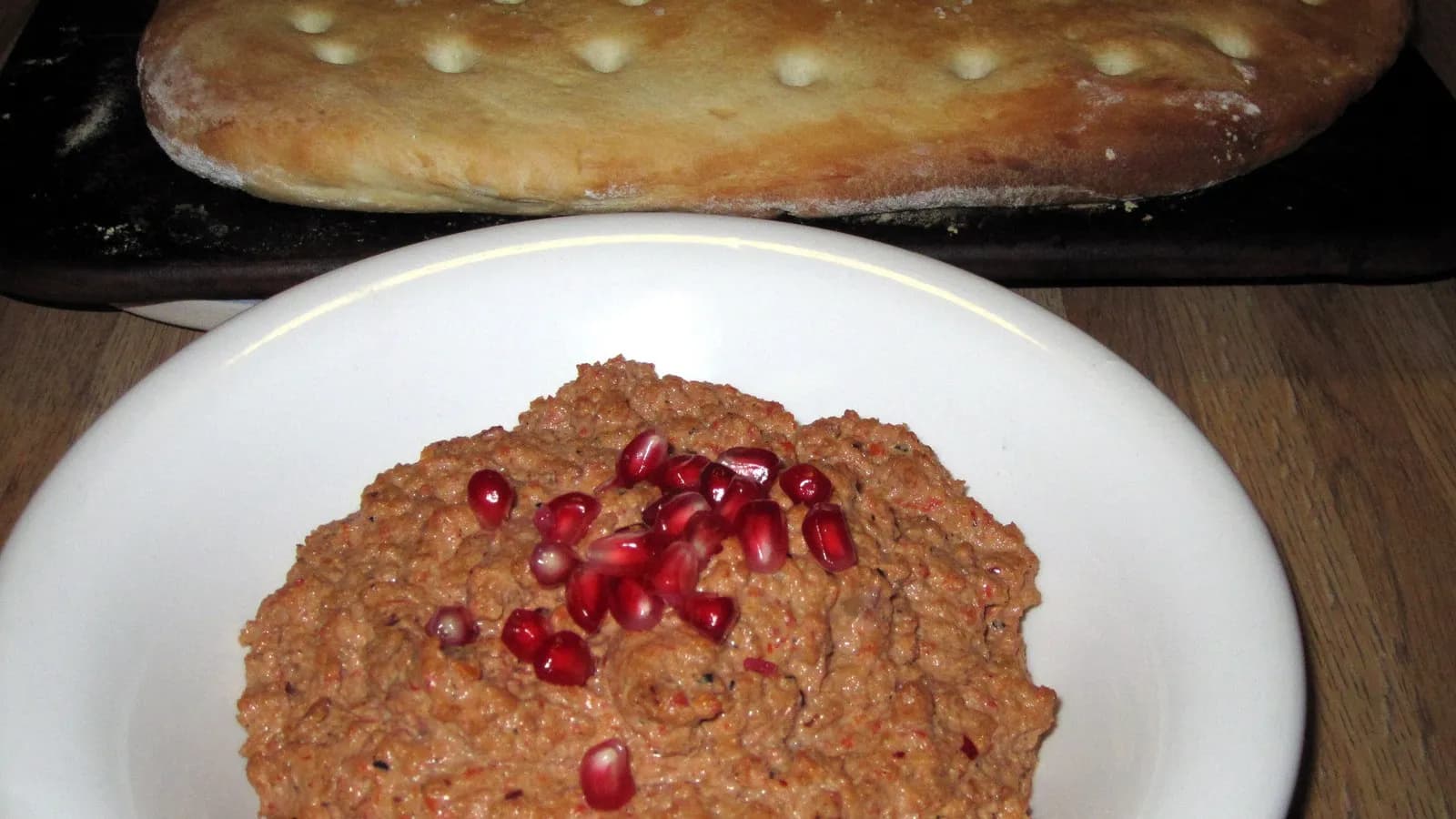
Muhammara comes from Aleppo, a city whose kitchen was built on the trade routes that brought it walnuts from the north, pomegranates from the orchards outside the walls, and the mild, fruity red pepper that dries into the flakes the world now calls Aleppo pepper. The name just means "reddened". It sits on a mezze table beside hummus and baba ghanoush and is usually the first bowl emptied, because it is the one that tastes of something: sweet from the peppers, sour from the molasses, bitter from the walnut skins, and a slow warmth from the pepper paste that builds without ever becoming hot.
Ingredients
- 4 large red peppers, or a 450 g jar of roasted peppers, drained
- 120 g walnuts
- 60 g fresh breadcrumbs, or 40 g dried
- 2 tablespoons pomegranate molasses, plus more to finish
- 1 tablespoon Aleppo pepper flakes, or 1 tablespoon mild red pepper paste
- 1 small clove of garlic
- 1 teaspoon ground cumin
- Juice of half a lemon
- 3 tablespoons extra virgin olive oil, plus more to finish
- Salt
Method
- If roasting your own peppers, blacken them under a hot grill or over a gas flame, turning until the skins are charred all over, about 15 minutes. Put them in a bowl, cover, and leave ten minutes; the skins will slip off. Discard skins and seeds and let the flesh drain in a sieve. Wet peppers make a wet dip.
- Toast the walnuts in a dry pan over medium heat until they smell nutty, five or six minutes, shaking often. Cool. Set aside a small handful for the top.
- In a food processor, pulse the walnuts with the breadcrumbs, garlic, cumin and pepper flakes until the texture of coarse sand. Do not run it continuously; muhammara should have grain.
- Add the peppers, molasses and lemon juice and pulse again until combined but still textured. With the motor off, stir in the olive oil by hand. Season with salt and taste: it should be sweet, sour and warm in that order. Adjust with more molasses or lemon.
- Rest at least an hour in the fridge; overnight is better. Serve at room temperature, spread in a shallow bowl, with a swirl of molasses, a thread of oil and the reserved walnuts crushed over.
Notes
The breadcrumbs are not a filler; they hold the oil and give the dip its body, and Aleppo cooks argue about how much. Some add a spoon of tahini, which softens it toward hummus and, in our view, loses the point. If you cannot find Aleppo pepper, Turkish pul biber is the same plant under another name; Kashmiri chilli is a fair substitute; ordinary chilli flakes are too hot and too flat. Pomegranate molasses varies wildly in sweetness between brands, so add the second spoon only after tasting. It keeps a week in the fridge under a film of oil, and it is the best thing to put on a grilled chicken sandwich that we know of. It belongs on the same table as hummus and toum, and it outlasts both.
Published in The Outspoken Digest
Editorial desk
Outspoken Digest Food DeskCooking, ingredients, restaurants and the economics of what ends up on the table.
Newsletter
The Digest, in your inbox
One edition, sent when it is ready. No noise, and your address is never passed on.
Read Next
More Recipes →
Tortilla Española: Six Eggs, Three Potatoes, a Great Deal of Olive Oil and One Nerve-Testing Flip
Sep 6, 2026/4 min read
Gazpacho Andaluz: Bread, Oil, Vinegar and Garlic Were the Soup Before the Tomato Arrived, and They Still Are
Sep 6, 2026/3 min read
Pesto alla Genovese in a Mortar, With the Trofie, Potatoes and Green Beans It Was Made For
Sep 6, 2026/4 min read
Panzanella Is a Salad Built to Use Up Stale Bread, and the Tomatoes Came Later
Sep 6, 2026/3 min read