Reading a Rug: Knot Counts, Wool Against Silk, and Why a Handmade Carpet Is Never Quite Square
Turn it over. The back of a carpet tells you what the front is trying to sell: whether it was knotted or tufted, how dense the work is, whether the colours went through the pile or were painted on.
Tuesday, July 4, 2023/3 min read
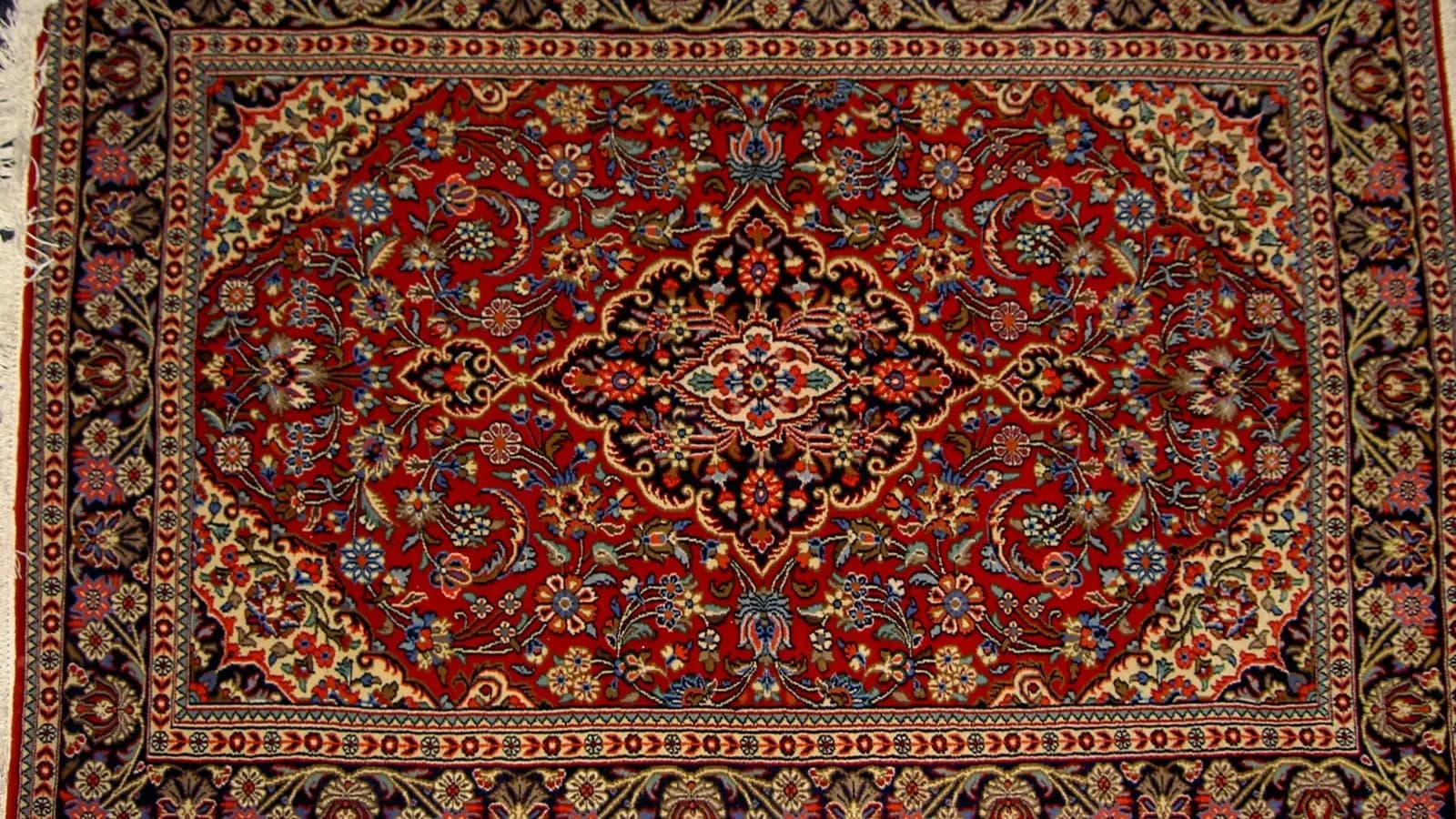
A carpet is the one object in a room that will outlive the room. A decent hand-knotted wool rug, looked after, lasts a century; the sofa beside it lasts ten years. That is the argument for buying one properly, and the reason the trade is full of things that look like one and are not. The Victoria and Albert Museum's collection holds the Ardabil carpet, half a millennium old and still legible in every knot, and the lessons of that object scale down to anything you might buy for a hallway.
Turn it over
The back is where the truth is. On a hand-knotted rug you will see the design repeated in the knots themselves, slightly blurred, and the fringe will be the ends of the warp threads that run the length of the carpet, not something sewn on. On a machine-made rug the back is usually covered by a cloth or a latex layer, the design is crisp and mechanical, and the fringe is stitched to the edge. A hand-tufted rug, which is a pile punched through a canvas with a gun and glued, has a plain fabric backing and no knots at all; it is a perfectly good floor covering that should cost a fraction of a knotted one, and often does not.
Knots
Knot density is quoted per square inch or per square decimetre, and higher means finer detail and more labour, not necessarily better. A tribal Turkish or Caucasian rug might have 60 knots to the inch and be magnificent; a fine Persian city carpet, Isfahan or Nain, might have 500 and be dull. The two knot types, symmetrical (Turkish) and asymmetrical (Persian), are a clue to origin rather than quality. Count by folding the rug back on itself and counting knots along an inch of the row, then an inch down, and multiply. A dealer who will not let you do this has a reason.
Wool, silk, and the things pretending
Good wool has lanolin in it and feels slightly greasy; it springs back when you press it and does not shine. Poor wool, chemically washed to make it gleam, feels dry and will wear through in a decade. Real silk has a cold touch, a high sheen that changes with the angle, and will not melt if a thread is burned; it smells of hair. "Art silk" is viscose or mercerised cotton, feels warmer and softer, and wears badly; it is fine on a wall and poor on a floor. A wool pile on a cotton foundation is the standard for anything that will be walked on. Wool on wool is older, floppier and more tribal. Silk on silk belongs on a wall or under a table nobody moves.
Colour
Dyes that have gone through the pile show on the back as strongly as the front. Painted or "tea-washed" rugs have colour only on the tips and show pale roots when you part the pile. Natural dyes vary slightly along a row, which the trade calls abrash and which is a feature, not a fault; chemical dyes are dead even. Neither is better, but you should know which you are paying for. Rub a damp white cloth on a dark area; if colour comes off, walk away.
Shape and wear
Handmade rugs are never perfectly rectangular; a couple of centimetres out over three metres is normal and a machine-straight edge is a warning. Even wear across the whole face is what you want in an old rug; a worn path with pristine edges means it has been cut down. Moth damage shows as bald patches on the back before the front. None of this requires an expert, only a willingness to kneel on a shop floor and look at the wrong side. The rugs worth buying reward it. Our piece on warm minimalism makes the case for why one good rug does more than a room of accessories.
Published in The Outspoken Digest
Editorial desk
Outspoken Digest Style DeskReports for The Outspoken Digest across Fashion, Design, Lifestyle.
Newsletter
The Digest, in your inbox
One edition, sent when it is ready. No noise, and your address is never passed on.
Read Next
More Design →
The Bench With the Extra Armrest Is Not Being Thoughtful About Your Posture
Sep 2, 2026/4 min read

The 400 Metre Cube Is Paused, Its Deadline Has Moved to 2040, and Its Chief Executive Has Gone
Aug 29, 2026/3 min read

A Beijing Studio Put a Restaurant Inside a Live Highway Underpass and Left Half of It to the Public
Aug 29, 2026/4 min read