Curtains for Heat and Light: Blackout, Lined, Sheer, and Why the Fitting Matters More Than the Fabric
A curtain that stops light and one that stops heat are different objects, and the gap at the top and sides undoes both. The choice is about what the window faces and what the room is for, not about the swatch.
Tuesday, February 25, 2025/3 min read
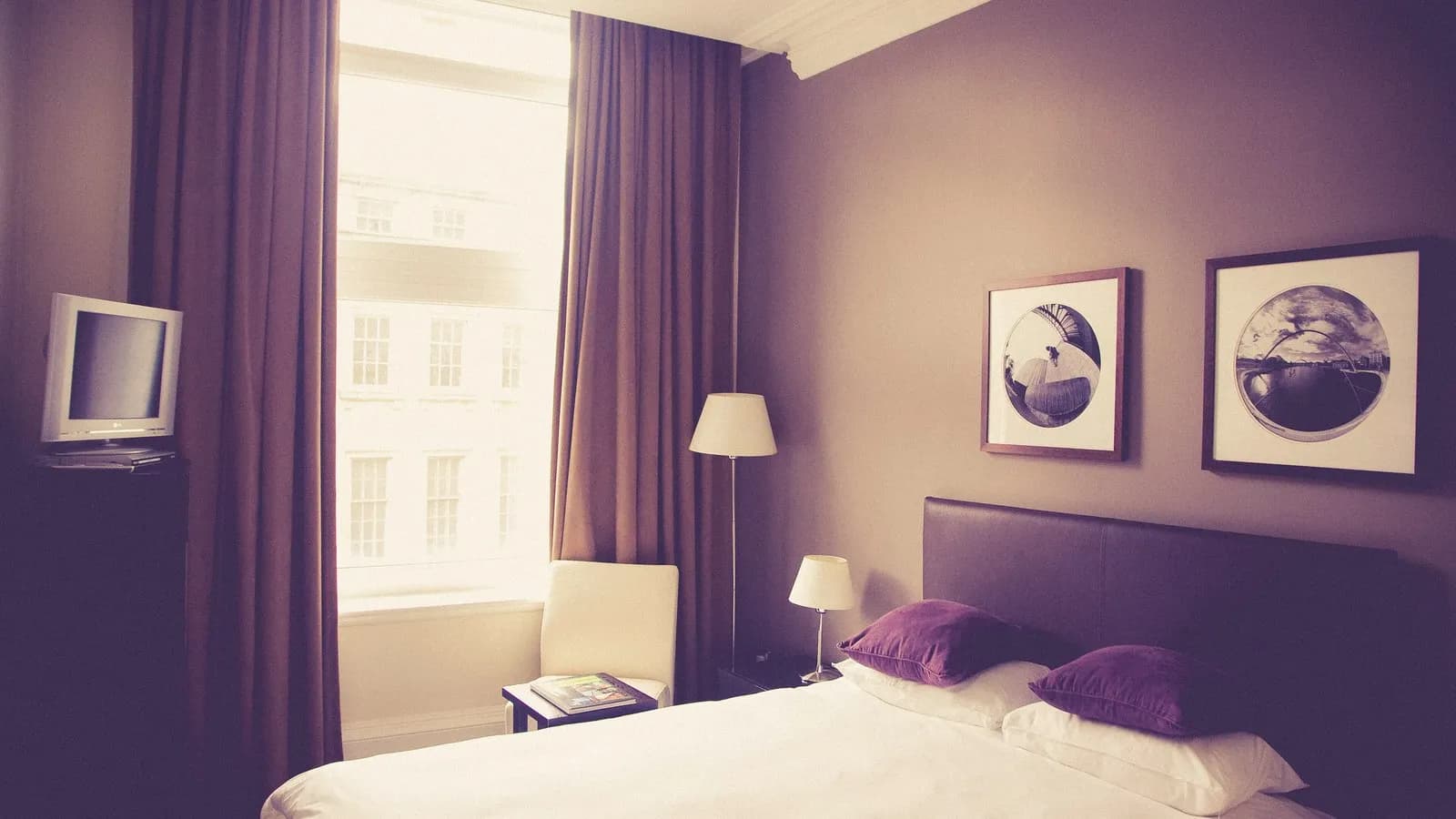
Curtains are bought for the fabric and fail for the fitting. A window covering does three jobs, blocking light, slowing heat, and softening a room, and each is decided by a different part of the object. The fabric decides how a curtain looks. The lining decides what it does. The track, the overlap and the return to the wall decide whether it does it at all, because light and heat both find the gap. A room in a hot climate with a west-facing window and a bedroom where someone works nights need different answers, and the swatch book will not tell you which.
Light
A blackout lining, a tightly woven or coated fabric behind the face fabric, stops almost all light through the body of the curtain. What it does not stop is the halo: light entering above the track, down the sides, and between the leading edges where two curtains meet. For a bedroom that must be dark, the track needs a pelmet or a ceiling fix that closes the top, the curtain needs to extend 15 to 20 centimetres beyond the frame on each side and return to the wall at the ends, and the two halves need an overlap arm so they cross rather than touch. Do that with an ordinary blackout lining and the room is dark; skip it with the most expensive blackout fabric made and there will be a stripe of morning on the ceiling. Blinds inside the recess leak more than curtains outside it; a blackout roller blind in the recess plus a lined curtain outside is the belt-and-braces answer for shift workers and small children.
Heat
Heat crosses a window by radiation, sunlight coming straight in, and by conduction and convection, warm glass heating the air beside it. Against the first, anything opaque and light-coloured on the room side helps, and a reflective or white-backed lining helps most; a dark curtain absorbs the radiation and becomes a radiator itself. Against the second, a curtain works as a still-air pocket, and the pocket only forms if the curtain seals at the top and the sides and reaches the sill or the floor. Interlined curtains, with a layer of cotton wadding between face and lining, are the traditional insulation for cold climates and work in hot ones for the same reason. But the honest ranking is: external shading first, since sun stopped outside the glass never becomes heat inside; reflective film or a light blind in the recess second; and curtains third. In the Gulf, where we have written about designing for 45 degrees, a west window without external shading will heat a room through any curtain made; the curtain merely decides whether the room is bright and hot or dim and hot.
Sheers
A sheer curtain, voile or linen gauze, does none of the above and is worth having anyway. It cuts glare, gives privacy by day, and softens the light that a bare window throws in hard blocks across a floor; in the evening, with lamps on, it stops the window becoming a black mirror. Layer it behind a lined curtain on a separate track and the room has three settings. Sheer alone is a fair choice for a living room facing north or a courtyard, and a poor one for any window the sun hits.
Fabric
Once the lining and fitting are right, the face fabric is a matter of weight and taste. Linen hangs beautifully and creases; cotton is the workhorse; wool and velvet are heavy, warm and dark; synthetics resist sun fading, which in strong light destroys natural fibres in a few years, most visibly on the leading edges. Whatever the fibre, sun-facing curtains should be lined for the fabric's sake as much as the room's. Length is a design decision: to the sill for a kitchen, to the floor or a centimetre above for everything else, and pooling on the floor only if nobody vacuums. Fullness matters more than people expect: a curtain gathered to twice the track width looks generous, one at one and a half times looks mean, and no fabric survives being stretched flat across a window. Our layered lighting guide is the companion piece; a room's light is decided by the windows in the day and the lamps at night, and the curtains are the hinge between them.
Published in The Outspoken Digest
Editorial desk
Outspoken Digest Style DeskReports for The Outspoken Digest across Fashion, Design, Lifestyle.
Newsletter
The Digest, in your inbox
One edition, sent when it is ready. No noise, and your address is never passed on.
Read Next
More Design →

The Bench With the Extra Armrest Is Not Being Thoughtful About Your Posture
Sep 2, 2026/4 min read

The 400 Metre Cube Is Paused, Its Deadline Has Moved to 2040, and Its Chief Executive Has Gone
Aug 29, 2026/3 min read

A Beijing Studio Put a Restaurant Inside a Live Highway Underpass and Left Half of It to the Public
Aug 29, 2026/4 min read