Reef Manners: Why Fins, Gloves, Sunscreen and a Single Touch Matter More to a Coral Than the Boat Above It
Coral is an animal with a skin a few cells thick. The diver who kneels for a photograph, the snorkeller who stands to adjust a mask, and the oxybenzone in a lotion each do damage that the reef cannot repair in a season.
Tuesday, June 4, 2024/3 min read
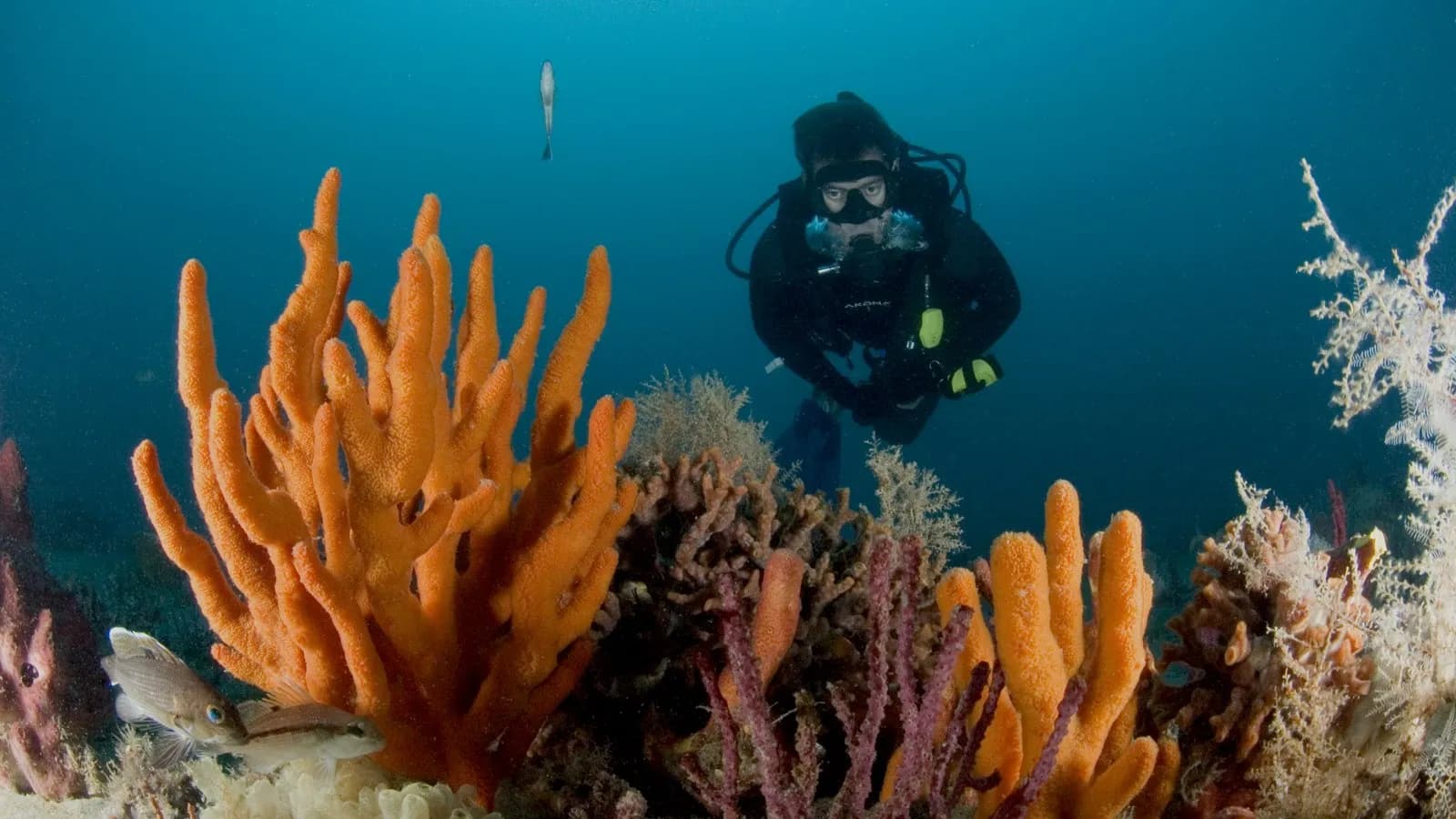
A coral reef is built by animals, tiny polyps that secrete a limestone skeleton and live in a thin tissue layer over it, feeding on the sugars made by algae that live inside their cells. That tissue is the whole living reef; the rest is rock. It is a few cells thick, it has no ability to move out of the way, and it takes a branching coral a year to grow a couple of centimetres and a boulder coral a year to grow less than one. The NOAA primer on what coral is makes the point in one line: it is an animal, not a plant or a stone. Everything below follows from that.
Touching
A hand on a coral crushes polyps and strips the mucus layer that protects the rest from infection; the white mark a diver leaves is dead tissue, and algae colonise it within days. A knee is worse. Fin tips are worst, because the diver cannot see them and because a kick delivers force. Most reef damage from divers is unintentional and comes from three moments: descending onto the bottom, stopping to look at something, and taking a photograph. All three are buoyancy problems, and our guide to weighting is the fix. A diver who is neutral and horizontal does not need to touch anything; a diver who is overweighted will touch everything.
Gloves
Many marine parks ban them, and the reason is behavioural rather than physical. A gloved diver holds on. An ungloved diver, knowing that fire coral stings and that rock is sharp, keeps hands to themselves. The exception is cold water and wrecks, where gloves protect against real hazards and there is little living coral to protect.
Fins and finning
Long stiff fins are the wrong tool on a reef. A frog kick, legs bent and fins moving horizontally, sends thrust backwards rather than down, and a back kick lets a diver reverse away from a coral head without turning. Both are learned in an afternoon and are the single greatest gift a photographer can give a reef. Silt kicked up by a flutter kick settles on coral and smothers it; on a reef flat in surge, the choice is often to stay off the bottom entirely.
Sunscreen
Oxybenzone and octinoxate, the ultraviolet filters in most chemical sunscreens, cause coral bleaching and deform coral larvae at concentrations measured in popular bays; Hawaii, Palau and parts of Mexico and Thailand have banned them. "Reef safe" on a label is unregulated and often means little. Mineral sunscreens based on non-nano zinc oxide or titanium dioxide are the safer choice, and the safest is a rash vest and a hat, which also cost less per season. Apply whatever you use half an hour before entering the water so it binds to the skin instead of washing off in the first minute.
Feeding, chasing, collecting
Feeding fish changes their behaviour, concentrates them where the boats are, and in the case of bread does them direct harm. Chasing a turtle for a photograph stops it breathing; it will surface when you leave. Anchoring on coral, which some day boats still do, destroys in a minute what took decades; ask before you book whether the operator uses moorings. Taking shells, dead coral or sand is illegal in most countries and pointless in all of them. The Reef Environmental Education Foundation runs volunteer fish surveys that turn a dive into data, which is the opposite impulse and a better souvenir.
The one thing
If a diver remembers nothing else: hover. Stay a metre off, look with the eyes, take the photograph from where you are or not at all. The reef will be there for the next diver, which on current trends is not something anyone can promise.
Published in The Outspoken Digest
Newsletter
The Digest, in your inbox
One edition, sent when it is ready. No noise, and your address is never passed on.
Read Next
More Diving →
Nitrox Buys You Bottom Time and Costs You Depth, and It Will Not Make You Less Tired
Sep 5, 2026/3 min read
Almost Every Skill Problem in Diving Is a Weighting Problem Wearing a Disguise
Sep 5, 2026/3 min read
The Ear Problem Nobody Teaches You Is the One That Happens on the Way Up
Sep 5, 2026/3 min read
In a Current You Are Not Swimming Anywhere, and the Skill Is Knowing That Early
Sep 5, 2026/3 min read