A Surging Treasury Yield Wiped $50 Billion Off Australia's Market on the First Trading Day of Q4
The ASX 200 fell nearly 2 percent to its lowest level since June as the US 10-year yield breached 5.3 percent, a level a T. Rowe Price strategist said triggered systematic selling once breached, dragging every sector and the big four banks lower.
Thursday, October 1, 2026/3 min read
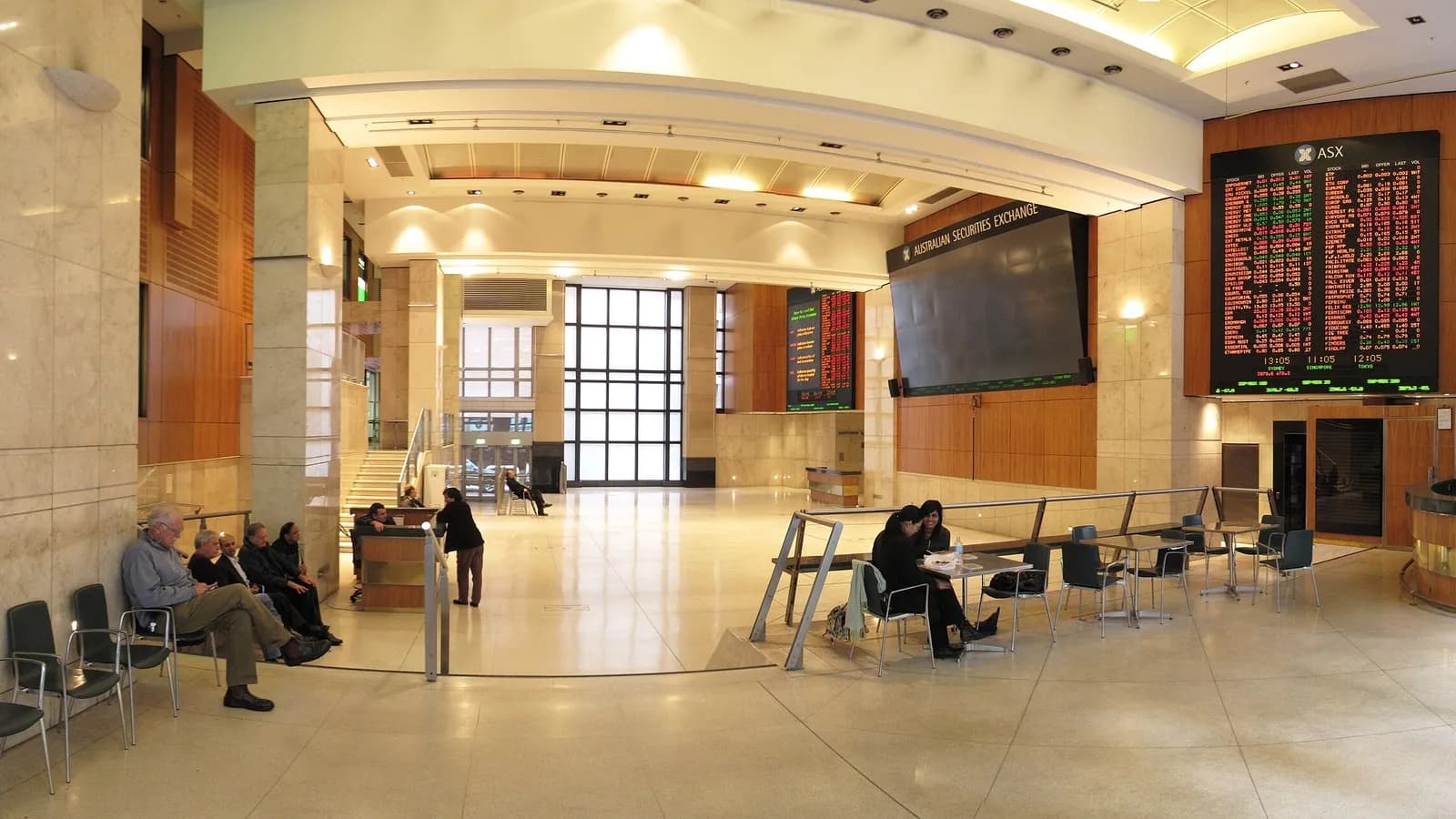
Australia's share market opened the fourth quarter badly on Thursday, with the ASX 200 falling 1.95 percent to 8,618 points by midday, its lowest level since mid-June, as roughly 50 billion Australian dollars was wiped from the market's total value in a session that saw every sector finish lower. ABC News's live coverage of the selloff traced the decline directly to overnight moves in US bond markets, where the 10-year Treasury yield breached 5.3 percent, a level the report described as both a psychological threshold and a key technical marker for traders worldwide.
Why breaching 5.3 percent mattered
T. Rowe Price strategist David Clewell explained the mechanics behind the scale of the reaction, telling ABC News that "once a key technical level like this is breached, systematic and quantitative positioning can amplify the move and lead to further selling." That dynamic means the sharpness of Thursday's fall in Australia reflects not just the underlying rise in American borrowing costs but the way automated trading strategies pegged to specific yield thresholds can turn a notable move into a much larger one once that threshold gives way.
Banks led the declines
The pain was broad but fell hardest on financial names, with the sector down 1.51 percent overall and the big four banks each posting sharper individual losses, ANZ falling 2.09 percent, National Australia Bank down 2.45 percent and Westpac off 2.08 percent. Consumer non-cyclical stocks were not far behind, down 1.56 percent, a spread across both financials and defensive consumer names that suggested investors were cutting exposure broadly rather than rotating out of a single vulnerable sector.
Strong data, higher yields, an awkward combination
ABC's report described the conditions feeding the selloff as a "perfect storm," pointing to strong underlying US economic data combining with already elevated bond yields to push the 10-year toward territory not seen in decades, a reading that Investrade's own market review echoed in describing the prior session's late reversal on Wall Street, a combination that tends to unsettle equity markets even when the economic data itself would ordinarily be read as good news. Robust growth figures that might normally support share prices instead read, in this context, as fuel for yields climbing further, since they reduce any near-term case for the Federal Reserve to ease policy.
A rough start to the new quarter
Thursday's losses mark an unusually sharp opening to the fourth quarter for Australian investors, who had entered the new three-month period already contending with a global bond market reassessment, and the 50 billion dollar single-session decline gives a concrete measure of how quickly that reassessment can translate into lost market value. With the US 10-year yield now sitting at levels unseen in roughly a generation, the question for Australian and other global markets heading further into October is whether 5.3 percent proves to be a ceiling or simply the latest staging post on the way higher.
Watching for the next technical level
Clewell's comments point to a market increasingly driven by where yields sit relative to specific numerical thresholds rather than by the underlying economic story alone, meaning the next notable round number on the 10-year's climb could trigger another bout of the same systematic selling that hit Australian shares on Thursday. Until bond markets find a level where yields stabilise, equity investors in Sydney and elsewhere are likely to keep watching American Treasury markets as closely as their own.
Published in The Outspoken Digest
Editorial desk
Outspoken Digest Markets DeskReports for The Outspoken Digest across Business, Crypto.
Newsletter
The Digest, in your inbox
One edition, sent when it is ready. No noise, and your address is never passed on.
Read Next
More Business →
The S&P 500 Closed Its Second Straight Positive Quarter as Cooler Inflation Fought Rising Treasury Yields
Oct 1, 2026/3 min read

Paramount Skydance Launched a $44.4 Billion Debt Sale to Help Pay for Its Warner Bros. Discovery Takeover
Sep 29, 2026/2 min read
MGM Resorts Is Weighing a Bid for People Inc, Months After the Magazine Publisher Tried to Buy MGM
Sep 29, 2026/2 min read

Trump and Xi Agreed to Cut Tariffs on $30 Billion of Goods and Open an AI Dialogue at Their Washington Summit
Sep 27, 2026/2 min read